
A Typical After-Storm Call
After a windy front comes through, the calls we get usually sound the same. A homeowner heard a loud bang during the night, went out the next morning, and found the garage door bowed outward between the panels, or one of the top sections pulled away from the track entirely. Sometimes the whole door is still standing but the bottom panel is dented inward from debris, or the track brackets have ripped partway out of the wall studs. In almost every case, the door looked fine the week before. Wind damage doesn't usually give much warning.
Why the Garage Door Fails Before Anything Else
Every other wall on a house is a solid, continuous structure. The garage door is a large moving panel held in place by a handful of hinges, rollers, and track brackets, plus whatever force the opener and springs can provide. When wind pushes against that much flat surface area, the load has to go somewhere, and it usually goes straight into the weakest connection point: the track fasteners, the end hinges, or thin, non-reinforced panels.
This is especially true with the mix of older and newer housing in this area. A lot of older garages were built with single-layer steel or wood doors that were never engineered for wind load, and the track is often lagged into studs that have loosened over the years. Newer insulated doors with heavier gauge steel and factory-reinforced struts hold up noticeably better, but even those can fail if the track hardware was never tightened or the opener's reverse mechanism is unreliable.
Why This Matters Right Now
Heading into late fall, this region sees a mix of heavy rain, the occasional remnant of a coastal storm pushing wind gusts well above normal, and the first icy mornings of the season. That combination is rough on a garage door in two ways. First, sustained wind and gusts put direct pressure on the door itself. Second, repeated rain and the freeze-thaw cycle that starts this time of year work on the metal, weatherstripping, and hardware, so a door that was marginal in September can be genuinely weak by December. Addressing it now, before the ground freezes and before the next low-pressure system rolls through, is far easier than doing it in the middle of a storm watch.
Signs Your Door Won't Hold Up
- Visible bowing in the center of the door when it's closed, even slightly, especially on wider two-car doors.
- Loose or rusted track brackets — grab the track with both hands and see if it shifts away from the wall.
- Gaps in the bottom seal that let daylight or wind through, a sign water and air are already getting in.
- A door that shudders or rattles noticeably in normal wind, not just during a storm.
- Panels with existing dents or cracks, which are weak points that will flex and fail first under added pressure.
What Actually Helps Before a Storm
- Check and tighten track hardware. Every lag bolt and bracket should be snug against solid framing. If the wall material has softened or the original fasteners were too light for the door, this is worth upgrading before wind season, not after a failure.
- Install horizontal struts if the door doesn't have them. Reinforcement struts run across the inside of the panels and spread wind load across the whole door instead of concentrating it in the center. This is one of the most effective upgrades for older, non-reinforced doors.
- Inspect hinges and rollers. Cracked hinges or rollers worn down to the bearing are common failure points. Replacing a handful of hinges is inexpensive compared to replacing a whole section.
- Replace worn weatherstripping and bottom seal. With the heavy rain this area gets, a degraded seal lets water pool at the base of the door, which adds weight, promotes rust at the bottom panel, and gives wind a place to catch and pry.
- Test the auto-reverse and manual release. If a power outage hits during a storm, you need to know the manual disconnect actually works so the door can be operated or secured by hand.
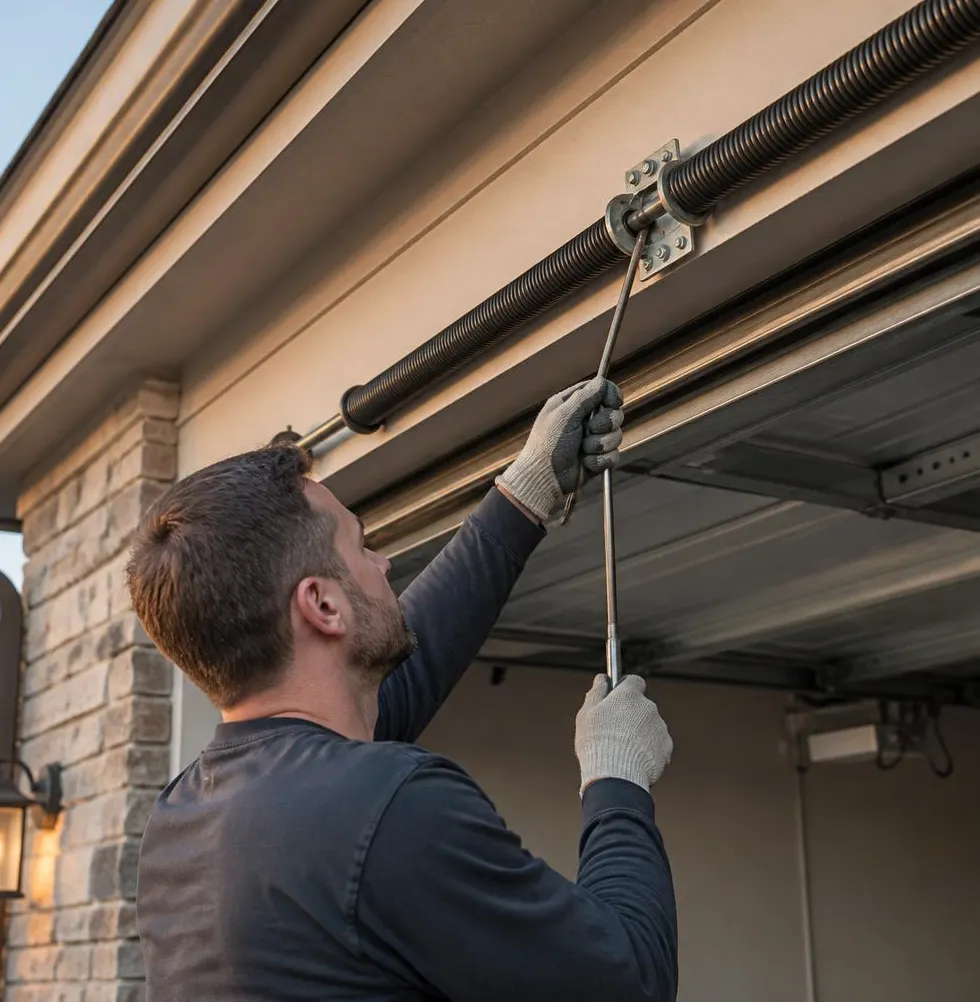
- Don't ignore the springs. A door with a weak or unbalanced spring puts more strain on the opener and track during every open-close cycle, which matters if you're opening and closing the door frequently to move vehicles or equipment ahead of a storm.
When to Call Berkeley Springs Garage Door
If your door is bowing, the track is pulling away from the wall, or you're not sure whether your hardware can handle sustained wind, that's a job for a technician rather than a weekend fix. We handle garage door maintenance visits that cover exactly this kind of pre-storm inspection — tightening track hardware, checking spring balance, and identifying panels or hinges that won't hold up to wind load. If the door is already damaged, bowed, or the springs are showing wear, our spring replacement and repair service gets it back to proper tension and safe operating condition before the next front comes through.
If you're in Berkeley Springs, Hedgesville, Martinsburg, Paw Paw, Great Cacapon, Hancock, Wardensville, or Capon Bridge and want your garage door checked before the next storm rolls in, give Berkeley Springs Garage Door a call. We'll take a look, tell you honestly what needs attention, and get it handled.